
Japanese tea, poured properly: the three greens at Aki’s afternoon tea
Getting four diaries to align took three weeks and two cancellations. But you did it. A whole afternoon, the whole...
Getting four diaries to align took three weeks and two cancellations. But you did it. A whole afternoon, the whole group, and a table at Aki, the contemporary Japanese restaurant in Marylebone.
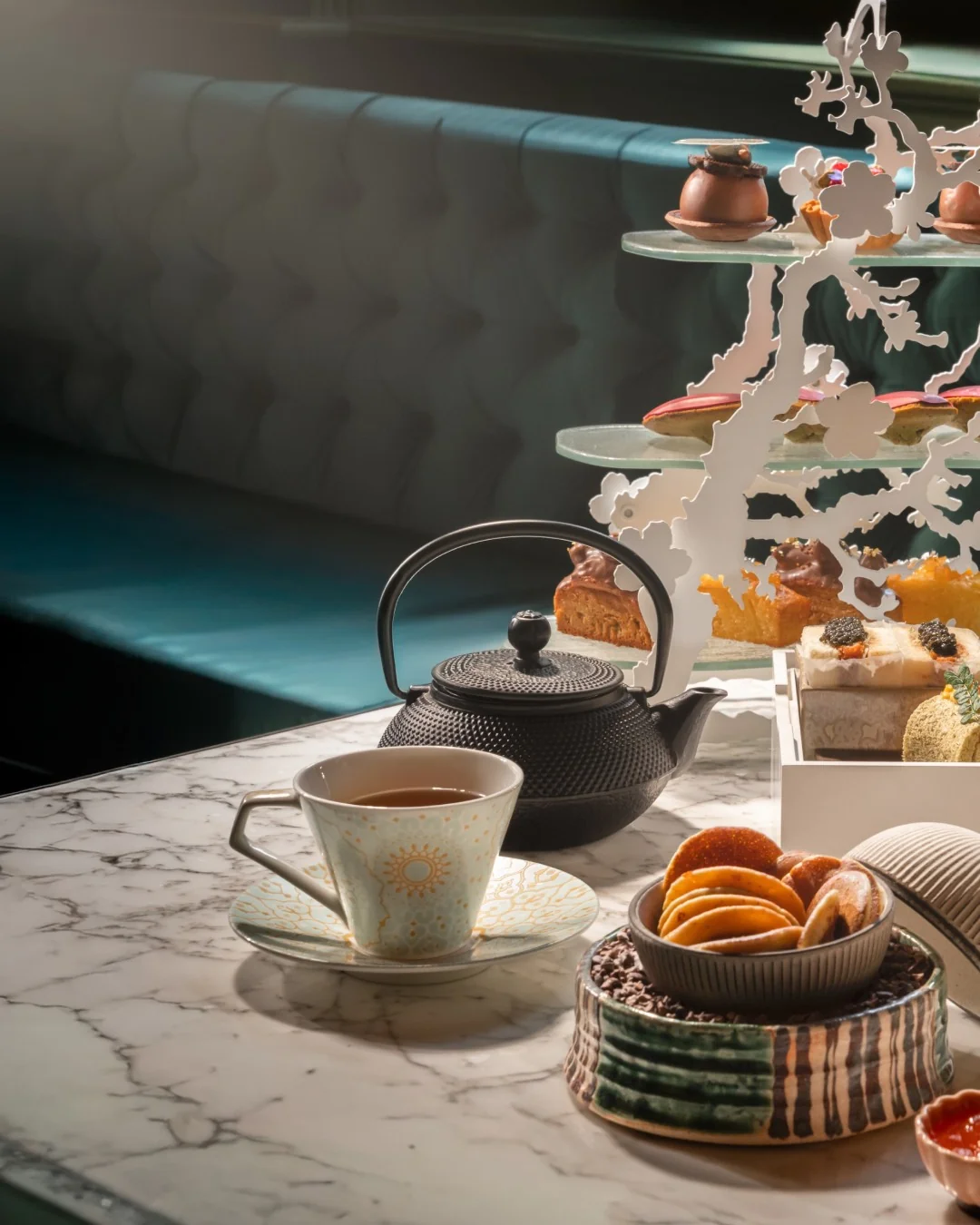
Above the main dining room, up a backlit spiral staircase, The Atrium holds the afternoon: a terrace with a retractable glass roof that opens when the day behaves and closes when it does not. The stand arrives looking like jewellery. Then the tea list arrives looking like homework.
Kabuse Saeakari. Gyokuro. Genmaicha. Between the familiar and the unknown sits a whole list of Japanese teas nobody warned you about, and suddenly you are the one the table is looking to for advice. Here is the good news. The kettle is the same for every table. The leaf is doing something completely different, and choosing well is far easier than it looks.
Japanese tea · Marylebone
Three Japanese teas, one teapot each, at Aki’s afternoon tea
Every afternoon tea at Aki comes with Japanese tea, and it is not an afterthought. One teapot per person, three Japanese teas to choose from, and a premium Gyokuro for a slower pour, served daily in The Atrium, the terrace above Cavendish Square.
- Our Japanese tea selection: Kabuse Saeakari, Genmaicha and a premium Gyokuro (available for a supplement), chosen by our Head of Wine, Sake and Tea
- Afternoon tea: Classic £49.50, Champagne £70 per person
- Where: The Atrium, Aki, 1 Cavendish Square, Marylebone, London W1G 0LA, minutes from Oxford Circus and Bond Street
- When: Daily, first seating 2.00pm, last seating 4.00pm
One plant, three cups: what makes Japanese green tea different
Although the Japanese tea we serve at Aki and the tea in your kitchen come from the same plant, the Camellia sinensis, what happens to the leaf in the hours after picking could hardly be more different.
Japanese green tea is steamed within hours of picking. That heat stops the leaf before it can darken, so what reaches the pot still tastes like the leaf itself: bright, naturally sweet and quietly savoury. That savouriness is umami, and it is the reason these teas behave so well beside a plate.
Where most teas were built to stand up to milk, Japanese greens were built to sit beside food. They refresh the palate between the chicken katsu and the yuzu tart, their gentle sweetness flatters pastry without competing with it, and each of the three pours a completely different personality from the same plant. Tea that behaves like another course on the stand, not a drink beside it.
Japanese tea: the sun is the ingredient
All three Japanese teas on Aki’s afternoon tea list come from the same plant, grown the same way. What separates them is sunlight, and how carefully it is withheld.
Cover a tea bush in the weeks before harvest and the leaf holds on to the sweetness and savoury depth these teas are famous for. Japanese growers call it shade-growing, and it is the single technique that shapes the finest green teas in the country.
Our list reads like a map of it. The Kabuse Saeakari comes from bushes shaded for around ten days, which places it halfway between an open-grown sencha and a fully shaded gyokuro. The gyokuro comes from the Asahina Valley in Shizuoka, where the bushes spend around thirty days under hand-woven rice screens before a first harvest in early May. Here is what each one pours.
The three Japanese teas at Aki: three depths of shade
Shaded green tea · Shiga
Kabuse Saeakari
Included in every afternoon tea
Kabusecha means covered tea: the bushes are draped against the sun for around ten days before picking, which places it halfway between an open-grown sencha and a fully shaded gyokuro. Ours comes from Shiga, and it is built on a cultivar worth knowing.
Saeakari was bred by Japan’s national tea research institute from a cross of Z1 and Saemidori, selected for quality and for resistance in the field, and it is prized for exactly what follows in the cup: deep umami and a grain-like sweetness. The result is creamy, gently savoury, and it lingers.
Best for: the guest who wants one pot that behaves from the first savoury bite to the last pastry.
Toasted rice green tea · Japan
Genmaicha
Included in every afternoon tea
The story most told about genmaicha places it in Kyoto in the 1920s, where a merchant roasted leftover rice and stretched expensive leaves into something everyone could afford. The documented history is thin, so take that as a good story rather than a fact. What is certain is the cup.
Ours blends green tea with toasted brown rice and a dusting of matcha, so the first pour arrives bright and green before it settles into the warmth of the roast. Served hot and fast, it is the most immediately familiar of the three.
Best for: anyone who takes their breakfast tea without milk and wants something warmer than a green.
Deep-shaded green tea · Shizuoka
Premium Gyokuro
Available for a supplement
Gyokuro’s story starts in 1835, when the tea merchant Yamamoto Kahei travelled to Uji to learn how the finest leaves were made, then brought the method home and gave it a name: jade dew. Ours comes from the Asahina Valley in Shizuoka, where the bushes spend around thirty days under hand-woven rice screens before a first harvest in early May.
At the table it is brewed cooler and slower than anything else on the list, poured in small concentrated cups, and reinfused as the afternoon goes on. The supplement buys time, shade and attention, not a stronger tea.
Best for: the guest who already loves dashi, oysters or sake, and wants to be surprised.
How Aki brews Japanese tea: the kettle matters as much as the leaf
The finest leaf in Japan can be ruined by a kettle poured carelessly, so the brewing here gets the same attention as the leaf itself. Cooler water protects the sweetness. Hotter water drags out bitterness. Each pot is drained completely, so nothing sits stewing between pours, and the same leaves are brewed again, a little hotter and a little shorter, opening into a second cup that tastes different from the first.
Brewed the same way in the same pot, the three teas would collapse into one another. Brewed properly, they are three different afternoons.
The tea list is chosen by Antonio Palmarini, Aki’s Head of Wine, Sake and Tea.
What to drink with what: pairing your tea with the afternoon tea
One teapot each. Here is where each one shines on the stand.
With the savoury tier
Kabuse Saeakari
Its freshness cuts through the fried crumb of the chicken katsu, and its gentle umami sits in step with the green-tea-smoked salmon and the golden yolk egg and truffle. If you want one pot that behaves from first sandwich to last pastry, this is it.
With the sweet end
Genmaicha
Toasted rice meets warm dorayaki like they were made for each other, and of the three teas it is the best companion to the chocolate and black sesame dessert. Keep it for the second half of the stand, where warmth matters more than brightness.
Across the whole afternoon
Gyokuro
It does not pair so much as arrive. Small cups, poured when the food is at its most delicate: beside the smoked salmon, between courses, and again as a hotter, lighter second infusion. Think of it less as a drink and more as three stages of the same afternoon.
“I will come back again with some of my important clients especially for dessert/tea!”
Jamila Jamilova, Google review, May 2026
Japanese afternoon tea · Marylebone
Three teas, one terrace, and an afternoon that does not need the forecast.
One teapot each, included with every Japanese afternoon tea at Aki. Classic £49.50, Champagne £70.
Japanese precision, a very British occasion
As the British Museum tells it, the Duchess of Bedford began gathering friends at four o’clock in the 1840s, and afternoon tea has been reinventing itself ever since. Tea itself had arrived in Britain two centuries earlier, in the 1650s, an expensive imported curiosity. What the Duchess made of it became the most civilised pause in the British diary.
Every era has put its own mark on the tradition, and Aki’s mark is Japanese. The finger sandwiches are chicken katsu and green-tea-smoked salmon. The scones step aside for warm dorayaki and yuzu pâtisserie. And where a classic British service pours one shared pot for the table, here every guest chooses their own, from a familiar Assam to a gyokuro shaded for weeks. The ceremony is the same. The leaf is on a different journey.
Which tea should you choose?
Ask yourself one question. Do you want fresh and balanced, deeply savoury, or warm and toasted? The first is the Kabuse Saeakari, the second is the gyokuro, the third is the genmaicha. The server can refine from there.
The teapot arrives, the list is long, and this time you know what every line of it means. Not because anyone explained it with a textbook. Just the sun, the shade, and a little patience.
Aki is a contemporary Japanese restaurant at 1 Cavendish Square, Marylebone, London W1G 0LA, minutes from Oxford Circus and Bond Street, and listed in the Michelin Guide. Afternoon tea is served daily in The Atrium, Classic £49.50 and Champagne £70 per person. Reserve online at akilondon.com/reservation.
Japanese tea · London
Japanese tea, poured properly, above Cavendish Square.
Kabuse Saeakari, genmaicha, and a gyokuro worth slowing down for.
Japanese tea at Aki: your questions answered
Everything to know about the tea at Aki’s Japanese afternoon tea in Marylebone.
What tea is included with Aki’s afternoon tea?
Every afternoon tea, Classic (£49.50) or Champagne (£70), includes one teapot per person, with no supplement to pay on the core list. You choose from the full tea list when you sit down, and three of those teas are Japanese greens: the Kabuse Saeakari, the genmaicha, and the gyokuro. Some premium teas carry a supplement. The same leaves are brewed more than once, so your pot keeps going as the afternoon does.
Which Japanese teas can I choose?
Three. The Kabuse Saeakari, from Shiga, is a shaded green tea sitting between sencha and gyokuro in depth. The genmaicha is a green tea blended with toasted brown rice and a dusting of matcha. The gyokuro, from Shizuoka’s Asahina Valley, is the deepest-shaded of Japan’s green teas, covered for weeks before harvest and brewed in small, concentrated pours. Each behaves very differently in the cup: bright and creamy, toasty and warm, or deeply savoury.
Is Japanese tea the same as green tea, or matcha?
Japanese tea is a category rather than a single drink, and most of it is green, though Japan also makes black, oolong and roasted teas. Matcha is different again: it is shade-grown tea ground into a fine powder and whisked into water, so you drink the leaf itself. The teas Aki pours by the pot are steeped whole leaves, strained before drinking. Matcha does appear at Aki in two other forms: it dusts the genmaicha, and it finishes the parting madeleines.
What is genmaicha?
Genmaicha is Japanese green tea blended with toasted rice. The rice softens the green tea’s briskness and adds a warm, cereal, faintly nutty aroma, which makes it the most approachable of the three teas on the list, especially for anyone moving over from black tea. Aki’s version also carries a dusting of matcha, which is why the first cup pours bright green.
What is kabusecha?
Kabusecha means covered tea in Japanese. The bushes are shaded for around one to two weeks before harvest, which deepens the tea’s sweetness and savoury depth, so it sits between an open-grown sencha and a gyokuro. The Saeakari cultivar used at Aki was bred by Japan’s national tea research institute for quality and for resistance in the field, which is one reason the cup is soft rather than bitter.
Why is the gyokuro a supplement?
The supplement covers a slower, more deliberate method, and a leaf that is far more expensive to produce. Gyokuro’s bushes spend weeks under cover before harvest, which concentrates the savoury-sweet character in the leaf and keeps yields small. At the table it is brewed cooler and in smaller volume, poured in stages rather than as one large pot, and reinfused so the same leaves carry several courses. You are paying for time, shade and attention.
Is gyokuro high in caffeine?
Yes. Of the Japanese green teas, gyokuro contains the most caffeine, because the same shade-growing that builds its sweetness also builds its caffeine. All three Japanese teas on the list contain caffeine. The genmaicha runs lower because part of each spoonful is toasted rice rather than leaf, though it is not caffeine-free. If you would rather avoid caffeine altogether, the Decaf Ceylon is on the list, alongside a range of herbal infusions.
I have never tried Japanese green tea. Which one should I start with?
Start with the Kabuse Saeakari. It is the most balanced of the three: brighter than the genmaicha, gentler than the gyokuro, and it sits happily beside both the savoury courses and the pastries. If you already know you prefer warm, nutty flavours and take your current tea without milk, choose the genmaicha instead.
Can dietary requirements be accommodated?
Yes. Vegetarian and other dietary versions of the afternoon tea are available when you let the team know in advance, so mention any requirements when booking. The pure teas on the list are naturally free from gluten and animal products, and the team will confirm the details for any blend or infusion if you flag an allergy.
Where and when is the afternoon tea served, and do I need to book?
Afternoon tea is served daily in The Atrium at Aki, 1 Cavendish Square, Marylebone, London W1G 0LA, minutes on foot from Oxford Circus and Bond Street. The first seating is at 2.00pm and the last at 4.00pm, and booking in advance is recommended. Gift vouchers are also available if you are buying for someone else.