

Aki: new Japanese restaurant in London’s Cavendish Square
There are certain London addresses that seem to have been waiting for their next life. Cavendish Square is one of them. Set back from the urgency of Oxford Circus, its garden and Georgian facades hold a different rhythm: one shaped by proportion, pause and the quiet confidence of a place that has watched the city change around it.
At No. 1, behind the stone frontage of a Grade II-listed former bank, Aki has begun a new chapter. A new Japanese restaurant in London, yes, but not a restaurant interested in novelty for its own sake. This is a place shaped by Japanese craft, Maltese beginnings and a building whose history asks for more than a quick reinvention.
Aki brings together sushi, sashimi, shared omakase platters, binchotan-fired robata and Japanese wagyu, with wine, sake and cocktails considered as part of the meal rather than an afterthought. Downstairs, in the building’s original vault, Kiyori changes the rhythm again: Japanese-inspired cocktails, rare spirits and a room built for the part of the evening that does not need to end with dinner.
Aki London · Cavendish Square, Marylebone
Modern Japanese dining in a former bank
Aki is a new Japanese restaurant in London, set in a Grade II-listed former bank at 1 Cavendish Square, Marylebone. The menu moves from sashimi and Edo-style nigiri to shared omakase platters, robata cooking and Japanese wagyu, with a wine and sake programme designed for the food.
- Where: 1 Cavendish Square, Marylebone, London W1G 0LA
- Nearest stations: Oxford Circus and Bond Street
- On the menu: Sushi, sashimi, omakase platters, robata, Japanese wagyu and dessert
- To drink: Sake, Japanese spirits, cocktails, Champagne and wine by the glass or bottle
- After dinner: Kiyori, Aki’s cocktail bar in the original bank vault
From Valletta to a new chapter in London
Aki may be new to London, but it did not begin here. The first Aki opened in Valletta, Malta, in 2020, where a modern expression of Japanese dining found an audience drawn to ingredient-led cooking, close attention to craft and hospitality that never mistook seriousness for stiffness.
Over four consecutive years, Aki Valletta earned a place in the Michelin Guide. More importantly, it developed a way of working: respect the source, understand the setting, and let the restaurant belong to the place in which it stands. Malta remains part of the story, not as a theme imposed upon the menu, but as a sensitivity to season, provenance and the particular character of an island.
London is a different chapter. The core philosophy has travelled, but the expression is new: a historic building, a deeper drinks programme and a pace that can hold a focused business lunch, a long dinner or an evening that continues below ground at Kiyori.
A Japanese restaurant in a former bank
Cavendish Square was conceived in the eighteenth century as part of a Georgian vision of order and harmony. Aki’s building carries that history in its bones. It has lived through many versions of London, including its long life as Sir Samuel Scott’s banking house, and now holds a restaurant shaped by a different kind of exchange: between a historic London setting and Japanese craftsmanship.
The restoration, led by designer Francis Sultana, did not treat the building as scenery. It began with a degree of reverence for what was already here: the original eighteenth-century panelling, the grand stone staircase, the scale of the former banking hall and the weight of the original vault doors below.
Look up and there are delicate plaster trees and cloud motifs drifting across the soaring ceilings, a quiet nod to Japanese decorative screens. Look more closely and Japanese references continue in less expected places, including bespoke furnishings with the rich texture of kimono fabrics integrated into their design. These details do not compete with the building’s Georgian character. They give it another language.
The result is not a Japanese room placed inside a London building. It is a dining room where Thomas Archer’s early Georgian vision, the restrained gravitas of a former banking house and contemporary Japanese craft are allowed to hold their own conversation.
The dining room
A former banking hall, reawakened
The main room retains the generous scale of the building’s original purpose, softened with natural materials, considered lighting, bespoke furnishings and a curated collection of contemporary art.
The vault
A second room below street level
Behind the original steel doors, the former bank vault becomes Kiyori: a low-lit cocktail bar for Japanese spirits, house cocktails and the slower final chapter of dinner.
Sushi, robata and Japanese craft
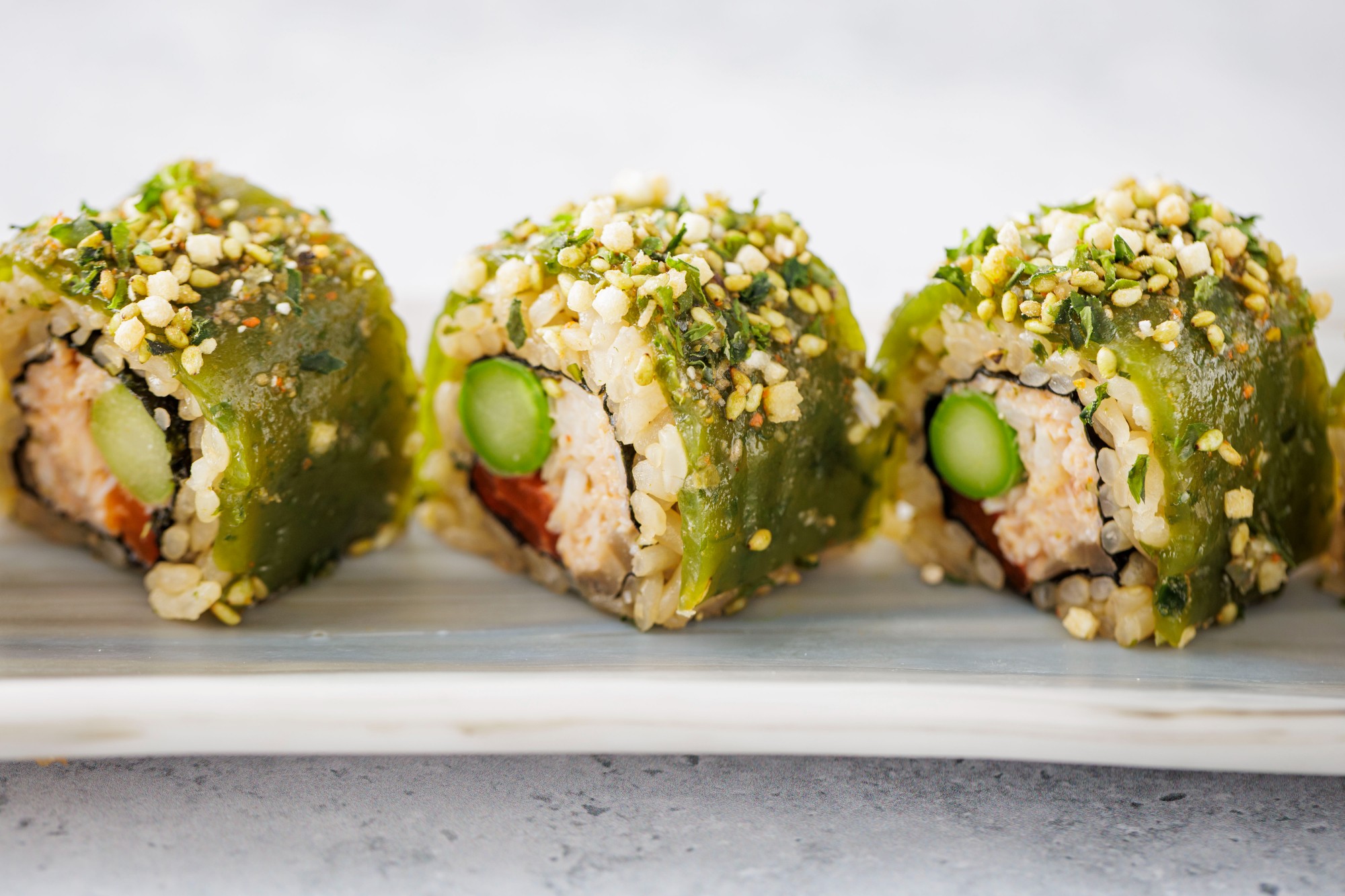
Aki’s cooking begins with Japanese technique, but it is not limited to one expression of it. The menu moves between the precision of sashimi and nigiri, the heat of binchotan-fired robata, composed small dishes and Japanese wagyu. The thread is attention to the ingredient, rather than an insistence on ceremony.
At the sushi counter, sashimi is cut to order and served with fresh root wasabi and 30-year-old sashimi soya. Edo-style nigiri is brushed with aged akasu and the same house soya. Bluefin tuna appears across its spectrum, from lean akami to richer chu toro and otoro, alongside Scottish salmon, seabream, hamachi, sea bass and saba.
Elsewhere, the robata gives the menu a different kind of energy. Fish, meat and vegetables meet binchotan charcoal, bringing smoke, caramelisation and depth without losing the clarity of the ingredient. Japanese wagyu, including Miyazaki beef on the current menu, brings another register entirely.
Sashimi
The purity of the cut
Fish cut to order, served with fresh root wasabi and 30-year-old sashimi soya. The sashimi omakase platter is available in 9, 15 or 21 pieces.
Nigiri
Edo style, made for the table
Nigiri brushed with 30-year-old sashimi soya and served on aged akasu rice. The nigiri omakase platter ranges from 6 to 32 pieces.
Robata and wagyu
Fire, smoke and depth
Binchotan-fired dishes give the menu warmth and depth, while Japanese wagyu brings a more indulgent counterpoint to the clarity of the raw fish.
“The wine selection is exceptional, and the sommelier was both entertaining and perfectly attuned to what paired best with our delicious food.”
Agnieszka Kita, Google review, April 2026
The chef’s selection, built to share
Omakase is usually understood as a progression: one piece, one course or one decision placed in front of the guest at a time. Aki takes a more social approach. The chef’s selection arrives as a sashimi or nigiri platter, composed from the day’s fish and designed for the table.
The format keeps the discipline of the chef’s choice while allowing dinner to find its own pace. You can begin with a six-piece nigiri platter at lunch, gather around a larger sashimi selection in the evening, then add robata, wagyu or a bottle from the cellar as the table develops.
Aki omakase
The chef’s selection, on your timeline
Aki’s omakase is served as sashimi or nigiri platters, curated from the day’s selection and made for sharing. Choose sashimi from 9 to 21 pieces, or nigiri from 6 to 32 pieces, then let the rest of dinner take its own course.
Seasons, craft and care
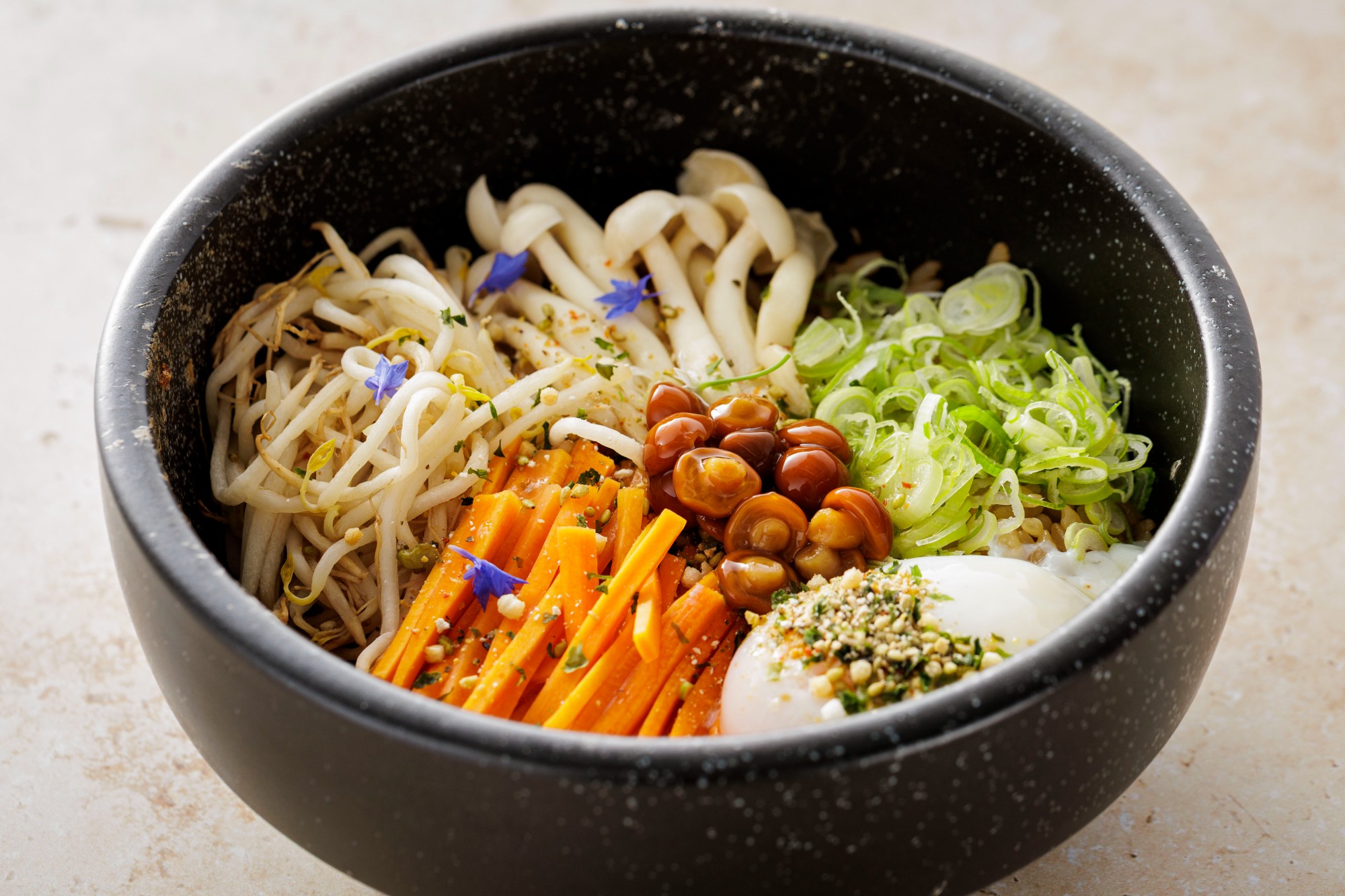
The kitchen’s attention begins before service. Aki grows Japanese herbs, leaves and blossoms in modular farms within the restaurant, while other ingredients are selected according to season and preserved in-house where the kitchen can add time as well as flavour.
Pickles made with nukadoko, the fermented rice bran central to Japanese preservation, bring one expression of that work to the plate. Fresh herbs, sea vegetables, dashi, koji, miso and careful fermentation all play their part. They are not decoration. They are the quiet structures that give the food depth.
The same discipline runs through the details of service: rice held at the right temperature, a clean cut of fish, wasabi used for aroma rather than heat, and a brush of soya intended to complete the piece rather than cover it. The work is often small. Its effect is cumulative.
A cellar and bar built for the food
The drinks programme follows the same principle as the kitchen: range matters, but so does intention. Aki serves sake, Japanese spirits, Champagne and wine by the glass and by the bottle, with a cellar built to sit naturally alongside sushi, sashimi, robata and wagyu.
For guests who want to go further into the wine list, Aki’s wine and sake programme runs every day, while Aki Uncorked opens one rarer cellar bottle by the glass on Thursday evenings. Cocktails draw on yuzu, miso, rare teas, awamori and house-infused shochu, with non-alcoholic compositions given the same attention.
Wine and sake
A serious glass beside dinner
Champagne, English sparkling wine, white, rosé, red, sweet wine and sake are available by the glass, with a deeper bottle list for the table.
Kiyori
Cocktails in the original vault
Descend after dinner for Japanese-inspired cocktails, rare spirits and a more intimate room behind the building’s original vault doors.
Kiyori, beneath the dining room
Kiyori is not an afterthought to the restaurant. It is the second half of the building. Set in the original bank vault, it takes the energy of the dining room and lowers the lights, with Japanese whisky, sake, awamori and cocktails that draw on the same ingredients and instincts found upstairs.
Some evenings begin there. Others arrive after sashimi, robata and dessert, when the conversation has earned another hour. Either way, it gives Aki a different rhythm from the usual dinner-only Japanese restaurant in London.
A new Japanese restaurant with a point of view
Newness is only useful when it brings something worth discovering. At Aki, that means a Japanese restaurant in London where the cooking is serious but the room is never solemn; where a historic building becomes part of the evening without becoming its whole subject; and where lunch, dinner, wine, sake and cocktails are allowed to belong to the same day.
It is a restaurant shaped by Japanese craft, Maltese beginnings and a very particular London address. The final element, as ever, is the table: who gathers around it, what arrives from the kitchen, what is poured beside it, and how long the evening is allowed to last.
Aki London · 1 Cavendish Square
Discover a new Japanese restaurant in Marylebone
Sushi, sashimi, shared omakase, robata and Japanese wagyu in the former banking hall, followed by cocktails in the vault. Reserve your table at Aki.
Aki is a modern Japanese restaurant at 1 Cavendish Square, Marylebone, London W1G 0LA, a short walk from Oxford Circus and Bond Street. Set inside a Grade II-listed former bank, Aki serves sushi, sashimi, shared omakase platters, binchotan-fired robata and Japanese wagyu, alongside a wine and sake programme. Downstairs, Kiyori occupies the building’s original bank vault, serving Japanese-inspired cocktails and rare spirits. Reserve a table at Aki London.
Frequently asked questions about Aki London
Everything to know about Aki, a new Japanese restaurant in Marylebone.
Is Aki a new Japanese restaurant in London?
Yes. Aki is a modern Japanese restaurant in London at 1 Cavendish Square, Marylebone. The London restaurant is a new chapter for Aki, which first opened in Valletta, Malta, in 2020.
Where is Aki London?
Aki is at 1 Cavendish Square, Marylebone, London W1G 0LA. It is within easy walking distance of Oxford Circus and Bond Street stations.
What food does Aki serve?
Aki serves modern Japanese food, including sushi, sashimi, Edo-style nigiri, shared omakase platters, binchotan-fired robata dishes, Japanese wagyu, desserts and a business lunch menu.
Does Aki serve omakase?
Yes. Aki serves sashimi and nigiri omakase platters, curated from the day’s selection and designed to share at the table. Explore Aki omakase.
Does Aki have a cocktail bar?
Yes. Kiyori is Aki’s cocktail bar in the building’s original bank vault, serving Japanese-inspired cocktails, Japanese spirits and rare whisky.
Does Aki serve wine and sake?
Yes. Aki offers an extensive wine list by the glass and bottle, alongside Champagne, English sparkling wine, sake and Japanese spirits. Explore the wine and sake programme.
Can I book Aki for lunch?
Yes. Aki is open for lunch and dinner. Please check the current menu and reservations page for the latest service details.
Can Aki accommodate dietary requirements?
Please tell the team about allergies or dietary requirements when making your reservation. The kitchen will advise on the most suitable dishes for your table.