
Japanese cuisine restaurant in London: what it tastes like at Aki
London has no shortage of Japanese restaurants. What it does have a shortage of is Japanese cuisine done as a...
London has no shortage of Japanese restaurants. What it does have a shortage of is Japanese cuisine done as a complete philosophy rather than a category on a delivery app.
Most of the city’s Japanese food exists somewhere between fast-casual conveyor belts and omakase counters booked three months in advance. The middle ground, where serious cooking meets a genuinely memorable dining experience without demanding a Michelin-level ceremony, is rarer than it should be. Aki exists precisely in that space. And if you are looking for a Japanese cuisine restaurant in London that understands what the cuisine actually is, this is where the conversation starts.
What authentic Japanese cuisine actually means
Before the dishes, the philosophy. Because Japanese cuisine is not a collection of recipes. It is a system.
Washoku, the traditional Japanese culinary framework recognised by UNESCO as an Intangible Cultural Heritage, is built around five principles that work together: five tastes (sweet, sour, salty, bitter, umami), five colours (goshiki), five cooking methods (raw, grilled, steamed, simmered, fried), and the concept of shun, which means cooking with the season rather than against it.
Sitting beneath all of this is Ishoku Dogen: the idea that food and medicine share the same root. That the freshest ingredients, chosen with intention and prepared with restraint, do more than taste good. They sustain you. This is not a wellness trend. It is a centuries-old Japanese spirit embedded in how a serious kitchen makes every decision, from the soy sauce it selects to the way it handles a piece of fish.
At Aki, our Head Chef’s Kyoto-influenced approach to shitakoshirae (meticulous preparation) means this framework shapes every dish on the menu rather than sitting in a mission statement no one reads.
The pillars of Japanese cuisine at Aki
A great Japanese cuisine restaurant does not do one thing well. It does five things well simultaneously. At Aki, those five pillars define the entire dining experience.
The Foundation
The sushi
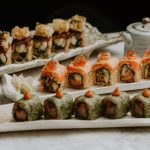
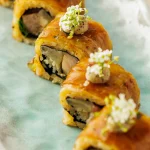
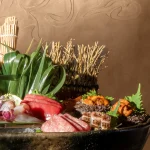
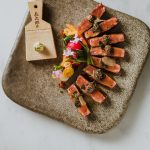
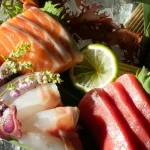
The sushi is where the master sushi chef’s judgement is most exposed. There is nowhere to hide in a piece of nigiri. The rice temperature, the knife angle, the quality of the fish: all of it is visible, tactile, immediate. Aki’s fresh sushi selection reflects sourcing that changes with the season, so what arrives on the plate is the best available rather than the most consistent. The sashimi, served with the restaurant’s own soy sauce blend, is the purest test of that sourcing. Order it first. It tells you everything about what follows.
The Heat
The robata grill
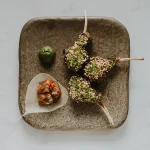
The heat dimension of Japanese cuisine. Binchotan charcoal, hot coals burning at close to 1,000°C, and a chef whose job is patience and precision. The caramelised black cod, the chicken and spring onion yakitori, the Sumiyaki grilled Canadian lobster: these are dishes that demonstrate what controlled fire does to flavour in a way that no other cooking method replicates.
The Social Heart
The small plates and Japanese-style tapas
The social heart of the meal. Japanese-style tapas built for sharing, rotating with the season, and designed to move the table through textures and temperatures rather than arrive all at once. The tuna tartare on an ice plate. The tender stem broccoli with yuzu wafu dressing. The kind of dishes that generate conversation before anyone has consciously decided to talk about the food.
The Trust
The omakase and Kobe beef
Omakase is Japanese hospitality in its most complete form: you trust the chef entirely, and the chef accepts full responsibility for the experience. It is the highest expression of omotenashi. For the wagyu section, Aki carries a distinction that almost no other restaurant in the United Kingdom holds: official certification from the Japanese Ministry of Agriculture, Forestry and Fisheries to serve genuine Kobe beef, confirmed by an official gold plaque displayed in the restaurant. This is not generic wagyu. This is the real thing, one of fewer than a handful of certified addresses in the entire country. The Kobe sirloin and the Kobe sukiyaki, in which thin slices are simmered in an aged soya broth with shungiku leaves, yomogi tofu, and shirataki noodles, are the most authoritative arguments for why provenance in Japanese food is not a marketing word.
The Confidence
The raw dishes
Raw dishes in Japanese cuisine are a test of confidence. Not cooking something is often harder than cooking it well. The purity of flavour in properly sourced, expertly prepared raw seafood is the clearest argument for why ingredient quality is the foundation of authentic Japanese food rather than technique alone.
Grown in-house, fermented in-house, wasted nowhere
This is where Aki separates itself from every other Japanese cuisine restaurant in the city, and where the Ishoku Dogen philosophy moves from concept to practice.
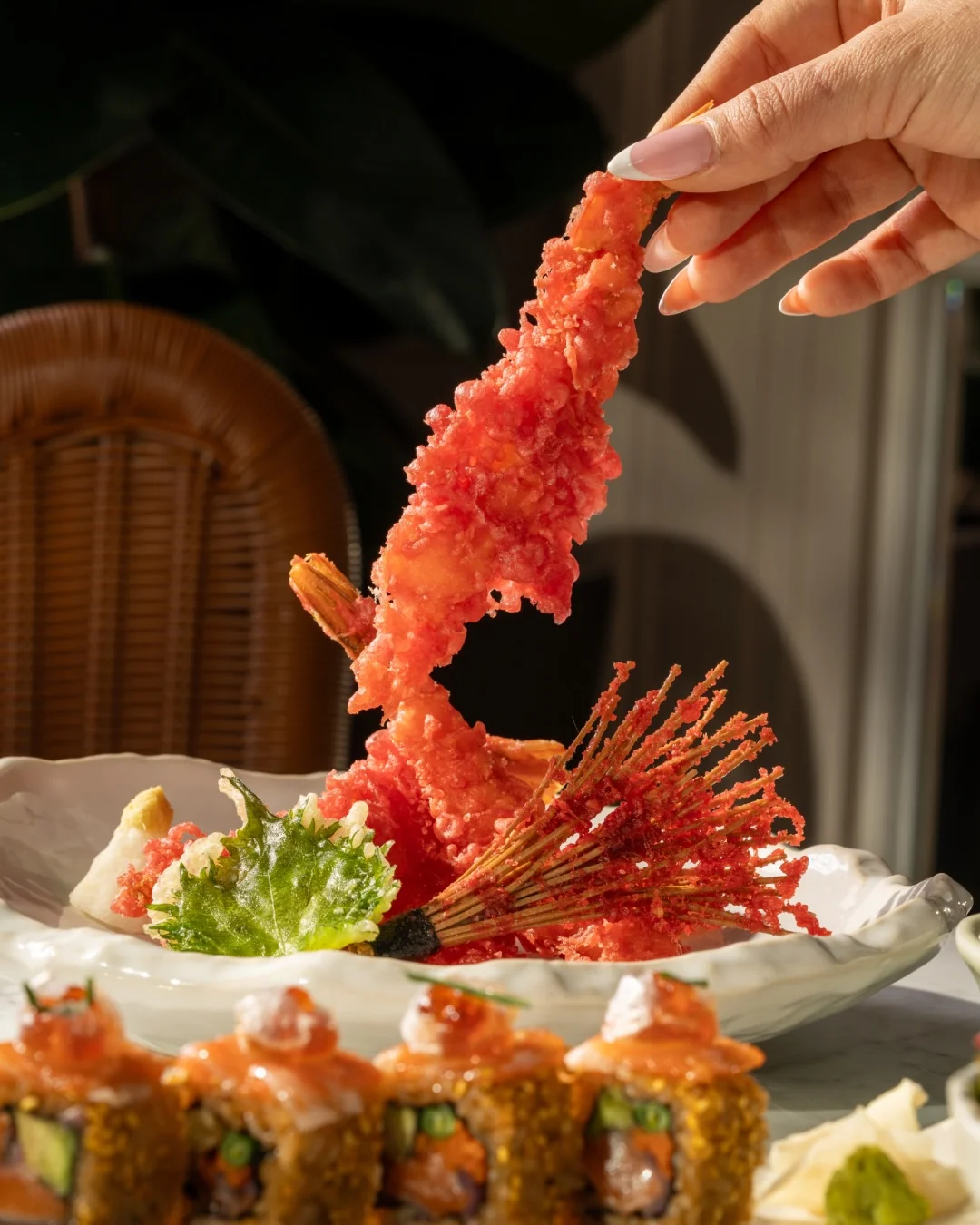
Eighty in-house micro farm growing trays, cultivated in recyclable coconut husk without pesticides, sit metres from the kitchen, producing rare Japanese herbs including shiso, kinome, and mitsuba that are harvested at the moment of service. These are not garnishes. They are flavour components grown specifically because the supermarket alternative, days old and handled by several pairs of hands, simply does not taste the same.
Alongside the micro farms, Aki practices in-house fermentation using nukadoko, a traditional fermented rice bran bed, to produce pickles and condiments that carry a depth of flavour impossible to buy off a shelf. The kitchen also follows a fin-to-tail philosophy, ensuring no part of a fish goes to waste: a commitment to ingredient respect that is as Japanese in spirit as anything on the plate.
The result is a dining experience built on the kind of quiet obsession that serious Japanese cuisine demands.
Sake, Japanese whisky, cocktails and beyond
Japanese cuisine without the right drink is an incomplete argument.
Sake is the natural entry point. A clean junmai mirrors the delicacy of raw dishes without competing with them. An aged kimoto sake, with its deeper, earthier character, finds its match in the miso-lacquered robata plates. The pairing logic is not complicated once you understand it, and the Aki team can guide you through it if you would rather ask than guess.
The Japanese whisky selection is worth exploring for anyone who has not yet taken it seriously. Distilleries like Nikka and Suntory have been producing whiskies that rival Scotland’s finest for decades, and the flavour profile, precise, layered, restrained, maps directly onto the same sensibility that shapes the food.
Downstairs, the Kiyori cocktail lounge translates the Japanese spirit into liquid form. Yuzu, matcha, shiso, and sake woven through cocktails that are as thoughtfully constructed as the dishes upstairs. The Japanese beer list covers the accessible ground between the two. Whatever you drink, the flavour logic runs consistently through the evening.
Japanese cuisine, done properly
From the sushi bar to the robata grill to the Kiyori lounge, Aki is Marylebone’s most complete Japanese dining experience.
Your table is waiting.
Private dining and group experiences at Aki
For those who want to explore Japanese cuisine as a group, Aki’s private dining offering is one of the most considered in Marylebone.
The Private Dining Room accommodates up to 24 seated guests with a bespoke menu built around the dishes that best represent the Aki philosophy. For larger gatherings, the room opens onto the Terrace for up to 40 standing guests. Whether you are planning a lunch for a team that deserves something better than a set menu, or a dinner that needs to feel genuinely special, the booking process is straightforward and the team will build the experience around you rather than around a standard template.
Finding London’s best Japanese cuisine restaurant
Aki is at 1 Cavendish Square, Marylebone, a short walk from Regent Street and Oxford Circus, close enough to the West End to be genuinely convenient, and calm enough to feel like a deliberate choice rather than a default.
London’s appetite for serious, authentic Japanese cuisine has never been sharper. Aki joins that conversation from Marylebone with a clear point of view: Japanese food as a complete philosophy, executed with precision, served without ceremony, and experienced as a full evening rather than a single course.
The story of Aki London begins with a Michelin-recognised flagship in Valletta, Malta, recognised four consecutive years running, and continues here at One Cavendish Square, inside a building that underwent a multi-million transformation led by designer Francis Sultana. Recently named among the top sushi restaurants in London by Condé Nast Traveller, and chosen by the Beckhams for a birthday dinner before the doors officially opened, Aki is only just getting started.
Aki London is a contemporary Japanese cuisine restaurant located inside a Grade II listed former banking hall at 1 Cavendish Square, Marylebone, London W1G 0LA (nearest tubes: Oxford Circus and Bond Street). Named among the best sushi restaurants in London by Condé Nast Traveller. Reservations are essential, particularly on weekends. Book your table online.
This is what Japanese cuisine in London should feel like.
Named by Condé Nast. Chosen by the Beckhams. Certified for Kobe.
Join us at 1 Cavendish Square for a Japanese dining experience unlike anything else in the city.
Frequently asked questions about Japanese cuisine at Aki
Everything you need to know before your visit to our Marylebone restaurant
What makes Aki different from other Japanese restaurants in London?
Aki operates as a complete Japanese culinary philosophy rather than a single-speciality restaurant. Five pillars run simultaneously: Edomae sushi, binchotan robata grill, seasonal small plates, certified Kobe beef, and an omakase experience. Add to that eighty in-house micro farm growing trays, a living nukadoko fermentation programme, 30-year aged soy, and one of fewer than ten UK Kobe beef certifications — and the difference becomes clear. This is Japanese cuisine built from the ground up around principles most kitchens find too expensive or labour-intensive to maintain.
What is Washoku and why does it matter?
Washoku is the traditional Japanese culinary framework recognised by UNESCO as an Intangible Cultural Heritage. It is built around five principles: five tastes (sweet, sour, salty, bitter, umami), five colours (goshiki), five cooking methods (raw, grilled, steamed, simmered, fried), and the concept of shun — cooking with the season rather than against it. Beneath this sits Ishoku Dogen, the idea that food and medicine share the same root. At Aki, these are not abstract concepts. They shape every decision the kitchen makes, from ingredient sourcing to plating.
Does Aki serve authentic Kobe beef?
Yes. Aki is one of fewer than ten restaurants in the United Kingdom to hold official certification from the Japanese Ministry of Agriculture, Forestry and Fisheries to serve genuine Kobe beef. The certification is confirmed by an official gold plaque displayed in the restaurant. Our wagyu section includes a Kobe sirloin (£170) and a Kobe sukiyaki, simmered in aged soya broth with shungiku leaves, yomogi tofu, and shirataki noodles. This is not generic wagyu. It is the real thing, traceable to a single animal with full documentation including the animal’s nose print.
What is omakase and how does it work at Aki?
Omakase means “I leave it up to you” — it is Japanese hospitality in its most complete form. You trust the chef entirely, and the chef accepts full responsibility for the experience. At Aki, our omakase experience combines Edomae nigiri and sashimi platters brushed with 30-year aged soy, served with fresh wasabi root grated to order on a sharkskin grater. The chef selects each piece based on what is at peak seasonality that day. Sashimi omakase is available from £24 (6 pieces), with nigiri platters up to £115 (32 pieces). Explore our omakase philosophy here.
What is binchotan charcoal and why does it matter?
Binchotan is white charcoal made from Japanese ubame oak, carbonised at 1,000°C then smothered in ash and earth. It burns at 800–1,000°C, producing no smoke, no flame, and no odour — just pure, radiant infrared heat that sears the outside of food while leaving the inside impossibly tender. It costs £30–£50 per kilogram and takes 40 minutes to light properly. A kitchen running binchotan every service is making a genuine financial commitment to flavour. At Aki, the entire robata section runs on binchotan, from the Boneless Chicken Wings (£14) to the Kobe Japanese Sirloin (£170). Read our full guide to robata grill cooking.
What is the micro farm programme at Aki?
Aki maintains eighty in-house micro farm growing trays, cultivated in recyclable coconut husk without pesticides, located metres from the kitchen. The farm produces rare Japanese herbs — shiso, kinome, mitsuba — that are harvested at the moment of service. These are not decorative garnishes. They are flavour components grown specifically because the supermarket alternative, days old and handled by several pairs of hands, simply does not taste the same. The micro farms run alongside a living nukadoko fermentation programme that produces traditional rice bran pickles in-house. Discover our farm-to-table approach.
What is Kiyori and can I visit after dinner?
Kiyori is Aki’s subterranean cocktail lounge, set inside the building’s original bank vault beneath the restaurant. It features a dedicated bar, bronze and gold interiors by Francis Sultana, original commissioned artwork, and a cocktail menu built around Japanese spirits and botanicals — yuzu, matcha, shiso, and sake woven through drinks as thoughtfully constructed as the dishes upstairs. Open Wednesday to Saturday from 5pm, with walk-ins welcome. No separate reservation is needed. Restaurant guests are encouraged to descend after dinner for a nightcap in one of London’s most distinctive drinking spaces. Discover Kiyori.
Does Aki offer vegetarian, vegan, or halal options?
Yes. Aki’s kitchen creates thoughtful plant-based dishes that do not feel like an afterthought, including the Wild Seaweed & Sea Vegetable Salad (£12) with black sesame yuzu and myoga, and the Tender Stem Broccoli with yuzu wafu dressing. Halal dishes are also available. Please inform us of any dietary requirements when you book, and the kitchen will ensure your evening is seamless.
Does Aki offer private dining?
Yes. The Private Dining Room accommodates up to 24 seated guests with a bespoke menu built around the dishes that best represent the Aki philosophy. For larger gatherings, the room opens onto the Terrace for up to 40 standing guests. Whether you are planning a corporate lunch or a celebratory dinner, the team will build the experience around you rather than around a standard template. For private dining enquiries, visit our events and private dining page or submit an enquiry.
Where is Aki located and how do I book?
Aki is located at 1 Cavendish Square, Marylebone, London W1G 0LA, inside a Grade II listed former banking hall. The nearest tubes are Oxford Circus and Bond Street, both a two-minute walk away. We are open seven days a week for lunch and dinner. Reservations are essential, particularly on weekends — we recommend booking two to three weeks ahead for a prime dinner slot. Book your table online or call the restaurant directly.